Digital Marketing Process and Plan
A digital marketing plan is a strateguc bluepring outlining how your brand will use online channels to achieve its business goals. The process relies on a clear, data-driven cycle: defining objectives, understanding your target audience, choosing the right media mix, executing with precision, and continuously measuring performance.
- Search engine optimization (SEO) SEO is a form of digital marketing businesses adopt to ensure their page ranks high on search engine result pages (SERP)
- Social media marketing
- Email marketing
- Content marketing
- Affiliate marketing
- Pay-per-click (PPC)
- Influencer marketing
Digital Marketing Process
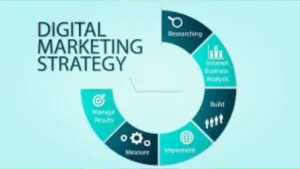
The digital marketing process is a cyclic framework used to promote products or services online.
It typically consists of 5 core stages: Research (audience analysis), Strategy/Creation (goal setting and content planning), Promotion (running ads or SEO), Analysis (tracking metrics), and Optimization (refining based on data).
The 5-Step Digital Marketing Process
- Research & Planning: Understand your audience, analyze competitors, and outline clear marketing goals.
- Strategy & Creation: Choose the best digital channels for your brand (e.g., SEO, paid ads, or social media) and craft compelling content.
- Promotion: Execute your strategy by driving targeted traffic to your website or landing pages.
- Analysis: Use analytics tools to measure campaign performance, traffic, and conversion rates.
- Optimization: Fine-tune your ad targeting, adjust budgets, and improve user experience based on your data.
A digital marketing plan is a comprehensive, data-driven roadmap that outlines how a business will use online channels—such as social media, SEO, email, and advertising—to achieve specific goals, connect with target audiences, and drive growth. It typically includes audience analysis, strategic goals, budget, channel selection, and key performance indicators (KPIs) to measure success.
Key Components of a Digital Marketing Plan:
- Target Audience Analysis: Clearly define who your customers are, their pain points, and where they spend time online.
- SMART Goals: Set specific, measurable, achievable, relevant, and time-bound goals (e.g., increase website leads by 20% in 6 months).
- Channel Strategy: Select appropriate platforms (e.g. LinkedIn for B2B, Instagram for B2C) and define the content strategy for each.
- Budget Allocation: Outline the financial resources required for paid advertising, content creation, and tools.
- Action Plan & Timeline: A detailed schedule of when campaigns will launch and who is responsible for executing them.
- KPIs & Measurement: Define metrics (e.g., conversion rate, cost-per-click) to track performance and adjust strategies.
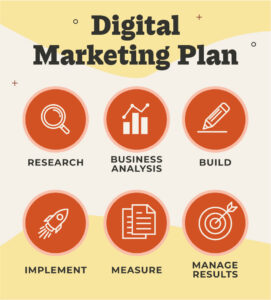
Steps to Create a Digital Marketing Plan:
- Analyze Current Presence: Assess existing website, social media, and search rankings.
- Define Objectives: Align marketing goals with overall business goals.
- Research Competitors: Understand the digital strategies of your competitors.
- Create Buyer Personas: Build detailed profiles of your ideal customers.
- Select Tactics: Choose the right blend of SEO, content marketing, PPC, and social media.
- Review & Refine: Monitor analytics regularly, such as using Google Analytics, to adjust your plan.
Core Benefits:
- Strategic Focus: Prevents wasted budget and ineffective efforts.
- Improved ROI: Connects directly with target audiences for better conversion.
- Agility: Enables businesses to respond to market changes and competition.
- Execution: Turn your strategy into actionable, smaller chunks. Utilize Google Analytics to routinely monitor how campaigns are performing.
- Testing: Regularly A/B test your ad copy, landing pages, and email subject lines.
- Optimization: Cease marketing efforts that aren’t generating an ROI, and scale up the channels that are yielding positive results.
A Digital Marketing Plan isn’t a dusty document—it’s a living, breathing strategy that propels your brand forward. It’s about blending creativity with structure, intuition with insight, to make your mark online.